Home Page
The latest articles, features and news.

All About...
Sponsored Links
Discussion Forums
Pecker Provisions
Condoms, lubes, pumps, stretchers, exercises, supplements, sports underwear and more.
Firefly Talks Dicks

Words of feminine wisdom about men's problems.
|
| | |
|
17 April 2003
New DNA Method For Predicting Prostate Cancer
by George Atkinson 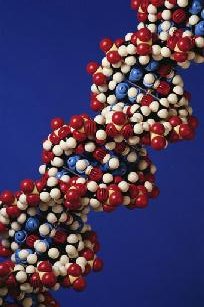 A new study, published this week in the Proceedings of the National Academy of Sciences, has shown that in about 40% of men older than 50 the DNA of the prostate is damaged. This damage closely resembles that found in the DNA of prostate cancer. This cancer-like DNA could readily be identified using biopsy tissues and is believed to indicate a high risk for prostate cancer, according to the lead investigator, Dr. Donald C. Malins of the Pacific Northwest Research Institute in Seattle.
 Malins and colleagues have found that the damage to prostate DNA increases with age and that free radicals are likely to be amongst the contributing factors. Additional evidence in the report shows that the DNA from prostate tumor biopsies could be used to signal whether a prostate cancer has begun to metastasize, thus allowing doctors and patients to reach more fully informed treatment decisions. Prior to this discovery, the only practical method for determining whether a prostate tumor has metastasized was to identify metastases in other parts of the body. Once a metastatic cancer has spread, intervention to save the patient's life is severely compromised. These new findings were obtained using a technique developed in Malins' laboratory combining highly sensitive and discriminating Fourier transform-infrared spectroscopy with statistical analysis. Malins stated that this technique is ideally suited for physicians to identify patients at risk for developing primary prostate tumors. "Most importantly, this finding is particularly promising for determining whether a primary tumor has progressed to the metastatic state, and for identifying those patients at high risk for metastasis," said Malins.
|
|
 Discuss in our forum