 Studies performed by researchers at the UC Davis Cancer Center showed that genistein, a chemical found in soy, slowed prostate cancer growth in mice and caused prostate cancer cells to die Ralph deVere White, director of the UC Davis Cancer Center and chair of the Department of Urology at the UC Davis Medical Center, will present the results of these studies at the annual meeting of the American Urological Association in Anaheim on June 2-7.
 Genistein is one of two compounds in soy that belong to a family of chemicals known as isoflavones. Isoflavones are phytoestrogens, plant-based chemicals that mimic the effects of estrogen in the body. Researchers theorize that the prevalence of soy in Asian diets may be one reason why men in Asia have a lower rate of prostate cancer than men in the United States.
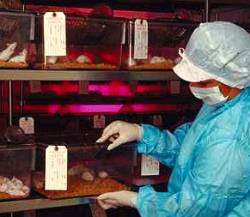
For the UC Davis study, scientists tested a commercially made extract of genistein on mice bred to develop prostate cancer and on metastatic prostate cancer cell lines.
In mice, genistein reduced prostate cancer tumor growth. In tissue culture, genistein increased the production of p21, a gene that regulates cell growth, and it reduced the production of vascular endothelial growth factor (VEGF), a protein that helps cancer grow. These factors caused cancer cells to die, a process known as apoptosis.
"We've identified the mechanisms by which genistein may work in prostate cancer, and it's consistent with other studies of soy," said deVere White. "While we are encouraged by these results, we need to test genistein in patients with prostate cancer to be certain of its effectiveness."
UC Davis researchers are now evaluating the effects of genistein in men who have been diagnosed with slow-growing prostate cancer. The cancer center will ultimately enroll 70 men in the pilot study to see if genistein lowers levels of prostate specific antigen (PSA), a tumor marker for prostate cancer.
Men who have chosen not to receive treatment for prostate cancer or who have undergone treatment and whose PSA levels are rising slowly are eligible to participate in the trial. Volunteers, depending on their body weight, will take up to five grams of genistein daily for six months. Results will be known in a year.
It is unlikely genistein would become a stand-alone treatment for prostate cancer, said deVere White. "But we hope it could be used in conjunction with conventional therapy or as a preventive drug, if it indeed lowers PSA."


 Discuss in our forum